

 See My Latest Article on HelloNation
A roof’s pitch is more than a visual feature. It affects how quickly water and snow leave the roof, which materials are appropriate, how easy maintenance will be, and how much usable space may exist beneath the roof.
For homeowners in Wyoming, MI, understanding roof pitch can make roof inspections, repair decisions, remodeling discussions, and storm preparation easier. The basic concept is simple: roof pitch describes how steeply a roof rises compared with how far it extends horizontally.
What does roof pitch mean?
Roof pitch is usually written as a ratio, such as 4:12 or 8:12. The first number represents the roof’s vertical rise, while the second number represents 12 inches of horizontal distance.
For example:
- A 4:12 roof rises 4 inches for every 12 inches of horizontal run.
- A 6:12 roof rises 6 inches for every 12 inches of run.
- A 10:12 roof rises 10 inches for every 12 inches of run.
A lower first number means a shallower roof. A higher first number means a steeper roof.
Roofers and builders may also describe pitch using degrees. A 4:12 roof has an angle of roughly 18 degrees, while an 8:12 roof is about 34 degrees. The ratio is more commonly used for construction and roofing measurements because it directly relates to the roof’s dimensions.
Why does roof pitch matter?
Roof pitch influences drainage, material selection, ventilation, attic design, and maintenance requirements. It also affects how a roof responds to seasonal conditions.
A steeper roof generally allows rainwater, melting snow, leaves, and small debris to move downward more quickly. A shallow roof may drain adequately when properly designed, but it can be less forgiving if gutters, valleys, flashing, or drainage paths become blocked.
Pitch also affects how much roof surface is exposed to wind and weather. A steep roof has more visible area from the side, while a shallow roof may have a broader horizontal profile. Neither is automatically better; the design must match the structure, climate, materials, and drainage system.
What roof pitches are common on homes?
Residential roofs commonly fall into several general ranges:
- Low-slope roofs: Less than about 3:12. These often require specialized low-slope roofing systems rather than standard shingles.
- Moderate-slope roofs: Approximately 4:12 to 6:12. These are common on many homes and can accommodate a wide range of roofing materials.
- Steep-slope roofs: Around 7:12 and higher. These shed water efficiently but may require additional safety measures during installation and maintenance.
There is no single “correct” pitch for every house. Older homes, additions, garages, porches, and dormers may all have different slopes. A roof with several pitches may be designed that way for architectural appearance, interior space, or to connect sections built at different times.
How does roof pitch affect rain and snow?
In a climate with cold winters, freeze-thaw cycles, and periods of heavy precipitation, roof pitch plays a role in how moisture behaves. Steeper sections usually shed rain and snow more readily, reducing the time water remains on the roof surface.
However, steep pitch does not eliminate winter roof problems. Snow can collect in valleys, behind dormers, near sidewalls, or where a lower roof meets a taller wall. Ice dams may form when heat escapes into the attic and causes snow to melt unevenly. The melted water can refreeze near colder eaves and interfere with drainage.
A shallow roof can also perform well if it has properly designed membranes, drainage paths, flashing, insulation, and ventilation. Problems are more likely when a roof’s slope is mismatched with its materials or when drainage components are poorly maintained.
Does roof pitch determine which materials can be used?
Yes. Roofing materials have minimum slope requirements. Standard asphalt shingles, for example, are generally intended for roofs with enough pitch to shed water beneath overlapping courses. Very low-slope sections may need a continuous or specially designed roofing system because water can remain on the surface longer.
Material considerations may include:
- The roof’s minimum recommended slope
- How water moves across seams and overlaps
- The weight of the material
- Wind exposure and fastening requirements
- Flashing design at walls, chimneys, and roof penetrations
- Compatibility with existing roof layers
A material that performs well on a steep gable roof may not be suitable for a nearly flat porch roof. Roof pitch should be considered before replacing only one section of a multi-level roof.
How can homeowners estimate roof pitch safely?
Roof pitch can sometimes be estimated from the attic rather than by climbing onto the roof. A level tool and tape measure can be used to determine how many inches the roof rises over a 12-inch horizontal distance.
For example, if the underside of a rafter rises 6 inches over a 12-inch run, the roof is approximately 6:12.
Other clues include:
- The angle of the roofline viewed from the ground
- Rafter or truss markings in accessible attic areas
- Original construction documents
- Measurements taken during a permitted addition or renovation
- The slope of a nearby roof section with similar framing
Walking on a roof to measure pitch is unnecessary and can be dangerous, especially when surfaces are wet, icy, damaged, moss-covered, or steep. Some roof shapes also make a ground-level visual estimate unreliable.
Does a steeper roof last longer?
Not necessarily. A steep roof may shed water and debris efficiently, but lifespan depends on many factors. Material quality, installation, attic ventilation, flashing, fasteners, underlayment, tree exposure, wind, hail, maintenance, and workmanship all matter.
A shallow roof can have a long service life if it is designed for its slope and installed with appropriate drainage and waterproofing. Conversely, a steep roof can develop leaks if flashing is damaged or if ventilation and moisture control are inadequate.
Roof pitch should therefore be viewed as one part of a larger roof system, not as a stand-alone measure of quality.
How does roof pitch affect attic space and ventilation?
Steeper roofs often create more vertical room in the attic, which may allow for storage or finished living space if the framing, insulation, egress, and ventilation meet applicable requirements. A shallow roof generally provides less headroom.
Attic ventilation is also influenced by roof shape and pitch. Ridge vents, soffit vents, gable vents, and other ventilation components must work with the roof’s framing and insulation plan. Blocked soffit vents or improperly placed insulation can restrict airflow regardless of the roof’s slope.
Good attic performance depends on controlling both heat and moisture. Warning signs may include damp insulation, frost on roof framing during cold weather, peeling paint near ceilings, musty odors, or recurring ice buildup at the eaves.
What should residents check after a storm or winter season?
Roof pitch can make certain areas more difficult to see from the ground. After severe weather or heavy snow, practical checks include:
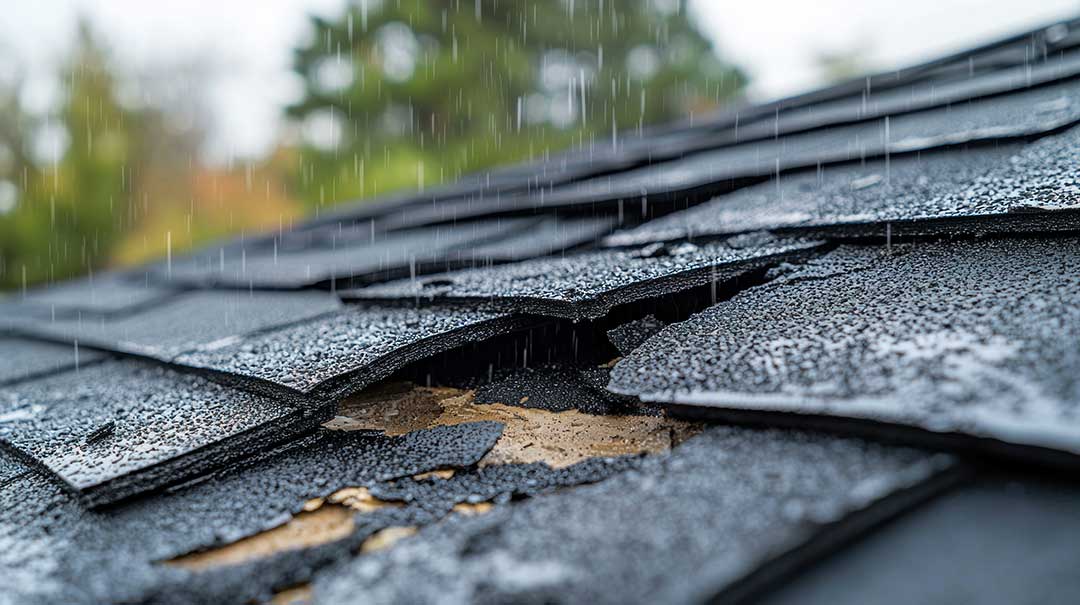
- Missing, lifted, or cracked roofing materials
- Damaged flashing around vents, chimneys, walls, and skylights
- Sagging roof sections
- Water stains on ceilings or upper walls
- Granules collecting in gutters or downspouts
- Blocked valleys or gutters
- Snow or ice concentrated in unusual areas
A roof that is steep, icy, visibly sagging, or otherwise unsafe should not be climbed. Safety concerns, structural damage, active leaks, or uncertainty about the roof system may require an assessment by a qualified roofing or building professional.
Understanding the pitch helps explain why a roof drains, sheds snow, uses certain materials, and has particular maintenance needs. It also gives homeowners a more useful vocabulary for discussing roof conditions without assuming that steep or shallow automatically means good or bad.